If you are shopping for a SCCY 9mm, you will run into the SCCY CPX-1 vs CPX-2 question within about five minutes. They look the same, they cost about the same, and they share almost every part. So what is the actual difference, and which one should you buy?
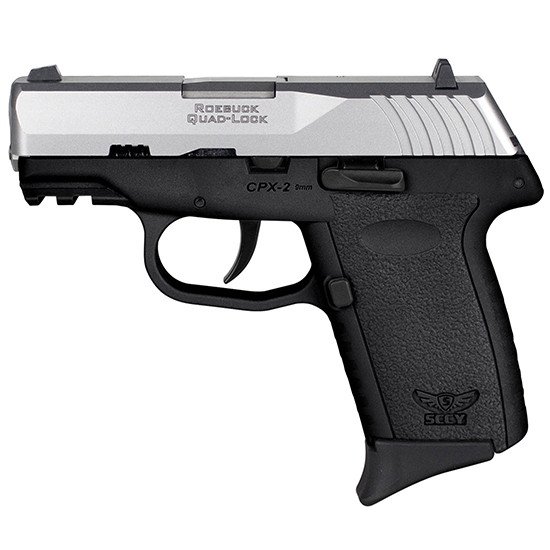
Short answer: the CPX-1 has a manual thumb safety and the CPX-2 does not. That is it. But that one difference changes how you carry, how you train and who each gun is right for, so it is worth thinking through before you order.
SCCY CPX-1 vs CPX-2 at a glance
| CPX-1 | CPX-2 | |
|---|---|---|
| Caliber | 9mm | 9mm |
| Capacity | 10+1 | 10+1 |
| Barrel | 3.1″ | 3.1″ |
| Action | Double-action-only, hammer-fired | Double-action-only, hammer-fired |
| Trigger pull | Long, about 9 lb | Long, about 9 lb |
| Manual thumb safety | Yes (ambidextrous on Gen 3) | No |
| Weight | About 15 oz unloaded | About 15 oz unloaded |
| Red dot (RD) versions | Yes | Yes |
Same size, same capacity, same trigger, same magazines. If you put them side by side with the safety lever covered, most people could not tell them apart.
How the SCCY trigger works (and why it matters here)
To understand the safety question, you need to understand the trigger. Both guns are double-action-only. Every time you pull the trigger, it does two jobs: it cocks the hammer and then releases it. That is why the pull is long and fairly heavy, around 9 pounds.
That long pull is a safety feature in its own right. It is the same idea as a double-action revolver, which has never had a manual safety. You have to mean it to fire the gun. It also gives you second-strike capability. If a round does not go off, you can pull the trigger again without racking the slide.
So the CPX-2 is not “unsafe” because it lacks a lever. It relies on the trigger, a good holster and good habits, like most modern carry pistols.
Why you might want the CPX-1
Some people simply feel better with a manual safety, and that is a fair reason. Here is where the CPX-1 makes sense:
- You are brand new to carrying. A safety gives you an extra step while you build good habits.
- The gun lives in a bag, purse or glove box. Off-body carry is where loose items can get into a trigger guard. A safety adds a layer of protection.
- You trained on a pistol with a safety. If your muscle memory already sweeps a safety off, the CPX-1 will feel natural.
- Other people in the house will handle it. Some households like the extra step for a nightstand gun.
The catch: you have to practice disengaging it every single time you draw. Under stress, a safety you forgot about means a gun that does not fire. If you buy a CPX-1, make “thumb sweeps the safety” part of every dry-fire and range rep.
Why you might want the CPX-2
The CPX-2 is the more popular of the two, and for most people carrying in a good holster, it is the simpler choice.
- Nothing to remember. Draw, aim, press. One less thing to fumble under stress.
- It works like a revolver. The long trigger pull is the safety.
- Slightly cleaner profile. No lever to snag or to get bumped in a holster.
- It matches most modern guns. If you also shoot pistols without a safety, the manual of arms is the same.
The one rule with the CPX-2 is the same rule for every pistol without a manual safety: use a real holster that fully covers the trigger guard. No pocket carry without a pocket holster, and no loose gun in a purse.
What about the Gen 3 models?
You will see “Gen 3” on a lot of both models. The third generation added a Picatinny accessory rail for a light or laser, and the CPX-1 Gen 3 uses an ambidextrous safety, so lefties can work it as easily as righties. If you have the choice, Gen 3 is the version to get.
What about the red dot versions?
Both the CPX-1 and CPX-2 come in RD versions with a Crimson Trace CTS-1500 red dot mounted at the factory. The safety question does not change, it is still safety vs no safety. What a dot does change is how fast and how accurately most people shoot a short-barreled pistol. If your eyes struggle with small iron sights, the RD models are worth the extra money. You can see the current RD options in our CPX-2 lineup.
So which SCCY 9mm should you buy?
Here is how we would decide:
- Carrying on your body in a good holster? Get the SCCY CPX-2.
- Brand new, carrying off-body, or you just want the safety? Get the SCCY CPX-1.
- Want a lighter, shorter trigger instead? Look at the striker-fired DVG-1.
Whichever one you pick, the important part comes after you buy it: a quality holster, a few hundred rounds of practice, and a couple of spare magazines. A cheap gun you have trained with beats an expensive one you have not.
CPX-1 vs CPX-2 FAQ
Do the CPX-1 and CPX-2 use the same magazines?
Yes. Both use the same SCCY 10-round 9mm magazines.
Can you add a safety to a CPX-2?
No. If you want a manual safety, buy the CPX-1. Modifying a pistol’s safety system is not a good idea.
Which is better for concealed carry, the CPX-1 or CPX-2?
For on-body carry in a quality holster, most people prefer the CPX-2 because there is nothing to disengage. For off-body carry or new shooters, the CPX-1 safety adds peace of mind.
Is there a price difference between the CPX-1 and CPX-2?
Usually only a few dollars, depending on color and finish. Price should not be the deciding factor.
Ready to pick one? Browse all of our SCCY 9mm pistols, and if you are new to ordering online, read how FFL transfers work first. For full specs, see the official SCCY site.